
Digital Digest
Marketing Intelligence Weekly

Weekly updates on the digital marketing news you need to know, including data reform, AI, cookie deprecation and platform updates.


AI in digital
Data privacy
Help desk
Platforms
Meta wants your website to train its AI
- Meta's updated commercial terms take effect on 30 October 2026, allowing it to crawl, collect and analyse content from websites associated with businesses using Facebook, Instagram and WhatsApp for commercial purposes.
- Your website content could be used to train Meta's AI. The new terms permit Meta to use collected material to develop and improve its products, potentially extending beyond content businesses have previously shared on its platforms.
- There's no opt-out. Businesses that reject the terms may need to stop using Meta's commercial products entirely, raising concerns about consent, intellectual property and control over website content.
- In Marketing We Trust is challenging the changes, having raised concerns with Australia's Attorney-General and begun working with industry bodies to coordinate a response.
- Marketers should seek written clarification from Meta about what website content will be collected, how it will be used and whether businesses can refuse without losing access to Meta's services.
- Read more

AI in digital
Help desk
Platforms
Google is poisoning automated search results
- Google appears to be deliberately serving misleading search results to automated queries, undermining the accuracy of third-party SEO rank tracking tools. Businesses could be seeing ranking drops that aren't actually happening.
- Research from Nozzle analysing 27.5 million search results found that 8% of pages were affected, peaking at 27% in late September. Australia was particularly impacted, with 11.5% of results affected compared to 8.5% in the US and 3% in the UK.
- The manipulation also impacts AI visibility tracking, with AI Overviews appearing on just 35% of affected pages compared to 54% normally. Local searches and niche queries are particularly vulnerable.
- In Marketing We Trust CEO Paul Hewett suggests Google's real target isn't SEO tools, but AI companies and data resellers scraping its search results. The consequences for marketers are increasingly unreliable ranking data and potentially higher SEO tool costs.
- Marketers should rethink their reliance on third-party rankings and prioritise first-party performance data from Google Search Console and analytics platforms to get a more accurate picture of search visibility.
- Read more

Platforms
TikTok Opens US Ad Network to Australian Advertisers
- Australian advertisers can now reach US audiences beyond TikTok, with the platform opening its off-platform TikTok Ad Network to global advertisers for the first time.
- Previously known as Pangle, the network spans nearly 400,000 apps, including gaming environments and premium third-party publishers. TikTok claims it provides access to an additional 95 million users globally who cannot be reached through its social feed.
- Availability for Australian advertisers will depend on campaign objectives and bidding strategies, with TikTok yet to name the specific apps included in the network.
- TikTok also announced plans to expand AI-powered shopping through Buy Direct and Shopping Assistant, working with Salesforce, Shopify, Shoplazza and Stripe to support product discovery and transactions.
- The move comes as Meta and Google accelerate their own agentic commerce capabilities, signalling growing competition to connect AI-driven product discovery with purchasing.
- Read more

AI in digital
Platforms
OpenAI Introduces Visual ChatGPT Ads and Expanded Measurement
- OpenAI is introducing a new visual advertising format in ChatGPT, allowing brands to showcase products, services and experiences through imagery. Initial testing will begin in the US in October, targeting Free and Go users during image generation.
- New measurement integrations aim to improve attribution and conversion tracking. Partnerships with Hightouch, Tealium, LiveRamp, AppsFlyer and others will help advertisers connect conversion data, measure campaign performance and assess ChatGPT Ads alongside existing marketing channels.
- Early advertiser results suggest promising performance. WeightWatchers recorded a 15.3% lower attributed cost per acquisition than its blended paid-search benchmark, while 93% of Portland Leather's visitors from ChatGPT Ads were new, according to measurement partners.
- Brand safety and suitability are also getting an upgrade. OpenAI is piloting independent evaluations with DoubleVerify and Integral Ad Science, alongside introducing Negative Phrases for qualifying advertisers to help control ad placements.
- For Australian and APAC marketers, the updates signal what's coming next. While the new visual format is initially US-only, expanding creative formats, third-party measurement and brand safety capabilities could make ChatGPT Ads a more viable performance marketing channel as availability grows.
- Read more
AI in digital
Platforms
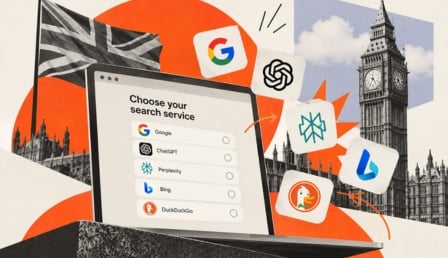
UK Proposes AI Assistants as Default Search Options
- The UK's Competition and Markets Authority (CMA) has strengthened proposals requiring Google to give Android and Chrome users greater choice over their default search provider, including AI assistants such as ChatGPT and Perplexity.
- Under the proposals, users would be prompted to select their preferred search service when first using Android or Chrome, with annual reminders to reconsider their choice.
- AI assistants could appear alongside traditional search engines on Google's choice screens, provided they meet technical and security requirements.
- Search providers featured on these screens would also need to clearly attribute publisher content, helping users identify and access original sources.
- The CMA closed its consultation on 9 October and expects a final decision by the end of 2026. For marketers, the proposals signal a potential shift in search discovery, with AI platforms gaining greater visibility as alternatives to Google.
- Read more

AI in digital
Platforms
OpenAI Launches GPT-6 With Interactive ChatGPT Experiences
- OpenAI has rolled out GPT-6 to ChatGPT's 1.2 billion weekly users, introducing a new model designed to deliver faster, more intelligent responses alongside a more interactive user experience.
- The biggest change is Intelligent UI, which allows ChatGPT to generate interactive charts, diagrams, forms, calculators and other visual tools directly within conversations, rather than relying solely on text-based answers.
- GPT-6 can also begin responding while it continues reasoning, reducing waiting times. According to OpenAI's internal testing, GPT-6 Instant starts answering web search queries 44% faster on average than GPT-5.6 Instant.
- For marketers, the update signals a shift towards AI experiences that combine information, visualisation and interactive functionality. This could influence how consumers research products, compare options and engage with brands without leaving ChatGPT.
- GPT-6 began rolling out globally to paid ChatGPT users on 7 October, with Free and Go users following on 8 October. The update applies to ChatGPT's conversational experience, with Work and Codex models remaining unchanged.
- Read more

Platforms
Google Search Console Adds Multi-Country Performance Filters
- Google has updated Search Console's Performance reports, allowing users to select multiple countries simultaneously and view their combined organic search performance.
- Previously, marketers could only filter performance data by one country at a time. The update makes it easier to analyse search traffic across multiple markets without switching between individual country reports.
- For international SEO teams, the new functionality simplifies regional performance reporting, allowing marketers to group markets such as Australia and New Zealand or the US and Canada.
- Google says the update is designed to make analysing traffic patterns across countries and devices easier. However, the article notes that dedicated click data for AI search performance remains a much-wanted feature.
- Read more

Platforms
Google Completes September Spam Update After 14 Days
- Google completed its September 2026 spam update on 8 October, following a global rollout lasting 13 days and 16 hours. The update applies to all languages and took considerably longer than the three earlier spam updates in 2026.
- Early analysis by Diib of 32,569 websites found the median share of traffic from organic Google Search dropped from 34% to 31%. However, the findings are preliminary and don't establish whether individual sites were penalised for spam.
- SEOmonitor also reported misleading ranking fluctuations from third-party tracking tools, potentially caused by incomplete or inaccurate Google search results rather than genuine ranking changes.
- SEO professionals should compare Google Search Console performance before, during and after the 24 September to 8 October rollout, focusing on sustained changes in impressions and clicks rather than short-term ranking volatility.
- Google hasn't disclosed which spam tactics the update targeted. Websites experiencing sustained declines should review Google's spam policies, with recovery potentially taking months.
- Read more

Data privacy
Aussie Privacy Reforms Could Reshape Everyday Marketing
- Proposed Australian privacy reforms could affect 31 of 32 common marketing activities according to our analysis. None was assessed as banned outright, but most could become more costly, less effective or dependent on platform controls.
- 20 activities could cost more, four could become less effective and seven depend on controls held by platforms. Only measuring a business’s own performance through analytics was assessed as unaffected.
- Marketers could carry responsibility for advertising opt-outs while relying on platforms to provide the controls. Customer list uploads, lookalike audiences and programmatic buying are among the activities exposed.
- Sending customer data to advertising platforms could constitute a “trade” requiring consent, unless the platform acts as a processor. Existing CRM records, newsletter lists and event registrations could also face new requirements.
- We recommend auditing tags and pixels, mapping data flows and documenting consent now. Hold off on mass re-permission campaigns until the legislation and platform responses are clearer: these findings assess draft proposals, which may change.
- Read more

AI in digital
Platforms
Google Gemini Adds UTMs For Clearer Referral Tracking
- Google Gemini has started adding UTM parameters to outgoing links, helping marketers identify traffic coming from the AI assistant.
- AI chatbot visits can appear as “direct” traffic when referrer information is lost. UTM tags provide another way to attribute those visits to Gemini.
- Clearer attribution helps marketers compare Gemini referrals with other AI platforms and traditional search, giving them better evidence for where to invest resources.
- Google’s implementation remains undocumented, so it’s unclear which Gemini links receive UTMs or what triggers the tagging.
- Read more

AI in digital
Marketing by numbers
Platforms
AI Overviews Expanding Across Branded Searches
- Ahrefs analysed 232.8 million US desktop Google search-result crawls from July to September 2026. AI Overviews appeared for 82.91% of branded keyword results on 29 September.
- Branded searches are increasingly triggering AI answers. The monthly average rose from 61.3% in July to 73.3% in September, narrowing the gap between branded and non-branded searches.
- AI Overviews often appear above the brand’s own website. In a separate sample of 100 brands’ exact-name searches, 63 triggered an AI Overview by 30 September, with 76.2% of those appearing in position one.
- Third-party content is gaining influence over brand narratives. Wikipedia, YouTube and LinkedIn were the most common external sources cited, raising concerns about unofficial or outdated information shaping what potential customers see.
- For marketers, monitoring branded rankings alone may miss the bigger picture. Ahrefs recommends tracking which branded queries trigger AI Overviews, what those answers say and which sources they cite.
- Read more

AI in digital
Platforms
ChatGPT Ads expands APAC access and campaign tools
- ChatGPT Ads’ self-service Ads Manager is now available in Indonesia, Malaysia, the Philippines, Singapore, Thailand, Vietnam and Taiwan, giving marketers targeting these APAC markets access to the platform.
- Retail advertisers can create multiple product-feed campaigns and ad groups through spreadsheet uploads, with ad templates generated automatically. This reduces setup work for brands managing large product catalogues.
- The Insights API now reports attributed conversions beyond a campaign’s selected optimisation goal. Marketers can track attributed purchases while continuing to optimise towards another conversion event.
- A new product review status shows approval progress and reasons for individual product rejections, helping advertisers troubleshoot product-feed campaigns.
- Advertisers can manage internal account, public brand and legal names separately. Plan changes carefully: updating a brand name pauses ads pending approval, while legal name changes restart business review and may interrupt delivery.
- Read more

AI in digital
Marketing by numbers
Platforms
TrafficGuard Finds Up to 34% Invalid ChatGPT Ad Traffic
- TrafficGuard’s analysis of 40,000 clicks across 47 advertisers over three weeks found invalid traffic rates as high as 34% on ChatGPT paid ads. Some campaigns were largely clean, while others attracted clicks classified as having no conversion intent.
- ChatGPT ad clicks came from data centre and proxy sources at 3.6 times the rate seen in Google Ads campaigns. Impossible device configurations appeared at 10 times the rate.
- Four hosting and proxy networks generated half of all invalid clicks, affecting 25 advertisers. At one hosting provider, 15 servers produced 318 invalid clicks across five advertisers.
- TrafficGuard flagged clicks based on infrastructure sources, impossible device configurations, known automation signatures or repeated patterns without conversion intent. On the worst-hit account, nearly 90% of flagged clicks came from server infrastructure.
- Miguel Lopes, chief product officer at TrafficGuard, said, "Some campaigns we analysed were largely clean, but others were paying for clicks that had no chance of converting. What this demonstrates is that waste is rising across every paid channel. OpenAI is not uniquely vulnerable, it is simply the newest place to sell clicks, and low-quality traffic follows the budget wherever it goes.”
- Read more

AI in digital
Platforms
OpenAI launches dots: always-on AI agents for work
- OpenAI has introduced dots, AI agents powered by GPT-6 Astra that work towards your goals 24/7. Each has its own cloud computer and can connect to over 4,000 apps through plugins.
- Marketing tasks feature prominently: dots can revise launch materials when product plans change, turn interview transcripts into clip suggestions and social drafts, and learn your brand voice through feedback. Work is prepared for your review and approval.
- They carry context across ChatGPT, Slack and Teams, letting you discuss projects, give feedback and receive progress updates across channels. Text messaging is coming soon.
- Users control app access and action permissions. Background proactive research is read-only, while Custom Rules and automatic action reviews determine what can proceed independently or needs approval.
- Rollout covers Pro and Business Premium in eligible markets, with an admin-enabled Enterprise beta. The first dot is included at no extra cost, with an allowance for deeper work; specialist enterprise pilots include email marketing and customer support.
- Read more

Platforms
Google Ads plugs conversion gaps with offline data
- Google Ads’ multi-source conversions beta now lets advertisers use offline data to fill gaps in website-tag conversions, giving Google more complete signals for measurement and bidding.
- Advertisers can connect sources through Google Ads Data Manager or its API, with transaction IDs used to match offline records to conversions already captured by the Google tag.
- If a tag misses customer details such as an email, phone number or address, offline uploads can supply them. Google recommends sending this additional data within 24 hours to improve Enhanced Conversions matching and bidding performance.
- Offline data can also correct conversion values after the event, allowing final order totals, upsells or refunds from a CRM to replace the original tagged value.
- There are guardrails: fields such as GCLID won’t be overwritten, and newly connected sources enter a 14-day trial period where additional conversions aren’t used for bidding and value updates are disabled.
- Read more

AI in digital
Platforms
Google Auto-Enables Native Checkout for Shopify Products
- Google is automatically enabling eligible Shopify products for native checkout across AI Mode and Gemini, allowing customers to purchase without visiting the retailer’s website.
- The feature uses Google’s Universal Commerce Protocol (UCP) and Google Pay, with Shopify’s built-in UCP integration connecting stores to Google Merchant Center.
- Eligible products are included automatically, with no additional setup required when products are published on Shopify and available in Merchant Center.
- Merchants wanting customers to complete purchases on their own website need to actively opt out through Shopify’s Sales channels > Agentic settings.
- Google says merchants still retain ownership of customer relationships, data and sales, despite checkout happening within Google’s AI experiences.
- Read more

AI in digital
Platforms
Microsoft Clarity makes bot activity easier to analyse
- Microsoft Clarity has launched Page Classification for its Bot Activity dashboard, grouping related pages by type so marketers can analyse bot behaviour across content categories instead of hundreds or thousands of individual URLs.
- Classification happens automatically, with Clarity combining content signals and URL-based rules to recognise page types, including sites with non-standard URL structures.
- Marketers can customise classifications by creating their own categories or adding URL paths to existing groups such as Product, Blog and Contact Us. Custom rules take priority over Clarity’s automatic classifications.
- The feature makes broader bot patterns easier to spot, such as whether bots are disproportionately accessing product pages versus blog content or concentrating activity within particular sections of a site.
- Page Classification is available now within Clarity’s Bot Activity dashboard, with classifications able to be managed according to each website’s structure.
- Read more

Platforms
Google Search Console Adds Multimodal Search Reporting
- Google has introduced multimodal search reporting in Search Console, giving marketers visibility into how their web content performs when people search using images rather than traditional text queries.
- The reporting covers traffic from Google Lens, Circle to Search on Android, image uploads to Google Search and Chrome’s “Search this image” feature.
- A new multimodal search type filter is available within Search Console performance reports, with the option to export the data for analysis in other tools.
- For marketers and SEOs, the update provides a new way to understand the contribution of visual content to organic search performance, helping inform how images and other visual assets are optimised.
- The reporting is rolling out globally, with metrics appearing for sites that receive traffic from multimodal search queries.
- Read more
Platforms
Google’s September Spam Update Is Rolling Out
- Google launched its September 2026 spam update on 24 September, rolling out globally across all languages and locations. Unlike the previous three spam updates this year, which wrapped within days, this one could take up to two weeks.
- The update targets sites violating Google’s spam policies, but does not specifically target link spam or every spam policy. Google hasn’t disclosed what percentage of searches or queries will be affected.
- Search volatility spiked the day after launch, suggesting marketers and SEOs could see noticeable ranking movement while the rollout continues.
- Sites that lose visibility should review Google’s spam policies and address potential violations. Recovery may not be immediate, with Google noting it can take “a period of months” for its automated systems to recognise sustained compliance.
- This is Google’s fourth spam update of 2026, following updates in March, June and August, making spam enforcement a particularly active area of Search this year.
- Read more
AI in digital
Marketing by numbers
Platforms
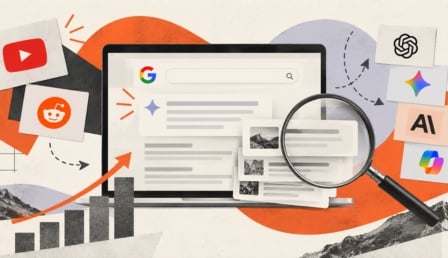
Google AI Overviews Now Hit 39% of Searches
- Google AI Overviews appeared in 39.4% of U.S. desktop searches in June 2026, up sharply from 25.8% in July 2025, showing AI-generated results are becoming a mainstream part of search.
- YouTube and Reddit are emerging as major AI visibility channels. In retail searches, YouTube appeared among top AI Overview citations in 23% of searches, followed by Amazon at 14% and Reddit at 12%.
- Being used as an AI source doesn’t guarantee a visible citation. Tripadvisor informed 61% of measured lodging AI responses but was visibly cited in just 21%, with similar gaps for Hotels.com, Expedia and Booking.com.
- ChatGPT’s share of AI assistant prompts dropped from 70% in January to 50% in June, while Gemini climbed to 30% and Claude to 11%, signalling an increasingly fragmented AI discovery landscape.
- For marketers, search visibility is expanding beyond traditional rankings. Brands now need to consider whether their content is being used and cited within AI-generated answers, alongside their conventional SEO performance.
- Read more

Data privacy
Privacy reform: what changes for marketing, and how fast
- Every marketing team in Australia is going to have to change how it handles customer data, and the timetable is likely to be months rather than years.
- On 31 August the Attorney-General's Department released the exposure draft of the Privacy Amendment (Personal Data Protection) Bill 2026. Since then we have run a full impact analysis of the draft against the way marketing operations actually work, and we lodged a submission with the department. Consultation closed 18 September.
- What changes: Sending identifiers to an advertising platform becomes a disclosure that needs consent. Identifiers count as personal information because they can be matched, and targeting an audience counts as direct marketing just as much as mailing a person does. The consent most databases hold will not qualify, because it has to be current and specific. It applies to data you already hold, not only to data collected once the law starts. And under the new controller and processor split, you carry the liability, not your agency and not the platform.
- Our analysis and what we found: We tested 32 ordinary marketing activities against the draft. Seven depend on a control that sits inside the advertising platforms rather than with you. Twenty keep running at higher cost. Four produce worse results than they do today. One is untouched.
- The work is structural if you run any customer list uploads into Meta Custom Audiences and Google Customer Match, lookalike and modelled audiences, programmatic buying, retargeting pixels and tags, conversion tracking and offline conversion uploads, onsite and in-app personalisation. If you run none of it, you still have retention, data discovery and contract work.
- When will this start: While this is not law yet, we don’t suggest reading that as breathing room. Consultation ran for under three weeks, submissions were capped at a thousand words, and the intention is to introduce a Bill before the end of the year. Our view is that this moves faster than most marketing teams are planning for.
- We’re hosting a Webinar, 30 September, 11am AEST to cover what the draft does to a marketing operation. You’ll leave with a plan: what to do now, what to hold, and in what order.
- Register for the webinar

Platforms
Platforms in travel
Google reshapes EEA search for DMA compliance
- Google has rolled out redesigned Search results across the European Economic Area, giving comparison services and direct suppliers dedicated placements for hotel, flight, transport and product searches.
- Eligible aggregators now appear in a dedicated unit, with the top-ranked provider expanded by default. Aggregators need Google approval and must supply data via feeds or real-time APIs.
- Direct suppliers such as hotels and airlines get a separate unit, but it only appears alongside the aggregator unit. For marketers, this creates a distinctly different search experience and visibility landscape in EEA markets.
- SEO teams should expect EEA rank tracking and Search Console data to diverge from markets such as the UK and US, making country-level performance monitoring increasingly important.
- Local search could be next, with Google indicating similar changes are being developed for dining, services and things-to-do searches, although no launch date has been announced.
- Read more

AI in digital
Platforms
Google Brings Checkout Back to Merchant Sites
- Google is rolling out cart transfer within its Universal Commerce Protocol (UCP), allowing shoppers to move items from Google directly into a merchant’s cart and complete checkout on the retailer’s own website.
- The cart transfer option has a simpler validation process, skipping requirements such as full product feed setup, product warnings and customer support details. Merchants can also test cart and checkout requests via a sandbox in Merchant Center.
- For retailers, keeping checkout on-site could help preserve brand experience, cross-sell opportunities and direct customer relationships, addressing concerns about transactions happening entirely within Google.
- Google is also introducing UCP analytics covering the journey from Buy button clicks through to purchases, including metrics such as average order value, cancellations and top-selling UCP products.
- The UCP hub is rolling out gradually in the US, with Australia and Canada expected in early 2027. Separately, Google’s AI performance insights report is already available to Australian merchants for English-language queries.
- Read more
AI in digital
Platforms
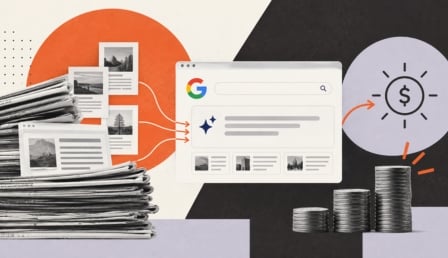
Google tests paying publishers for AI content
- Google is trialling an “AI contribution pilot” that pays websites and publishers when their content significantly contributes to AI-generated responses, including AI Overviews and other AI results.
- The pilot reportedly involves at least dozens of publishers, primarily small and mid-sized operators, and extends well beyond traditional news publishers.
- Participating publishers can see an earnings figure inside Google Search Console, potentially introducing a new revenue stream as AI-generated answers reduce the need for users to click through to source websites.
- Details remain limited, but participating publishers see the experiment as potentially significant because it establishes a precedent for Google directly compensating sites whose content powers its AI experiences.
- Google first flagged the concept in June 2026, describing plans to partner with websites whose content improves the freshness and factual accuracy of generative AI responses.
- Read more
AI in digital
Platforms
Google Ads Gives AI Bidding More Business Context
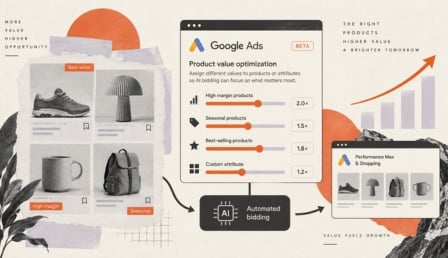
- Google Ads is testing Product Value Optimization, a beta that lets retailers adjust the value assigned to specific products or product attributes, helping automated bidding prioritise inventory that matters most to the business.
- Marketers can create adjustments around factors such as profit margins, seasonal stock and best-selling products, giving Google’s AI more commercial context than conversion value alone.
- The adjustments can be applied by product, brand, category and other attributes without restructuring campaigns, and can influence bidding across Performance Max and Shopping campaigns.
- The catch is that the AI is only as useful as the signals marketers provide. Prioritising a bestseller, for example, may not necessarily maximise incremental profit, so retailers will need to be deliberate about the business logic behind their rules.
- For marketers, the bigger shift is towards telling Google what value actually means to the business, rather than simply asking its algorithms to maximise reported conversion value.
- Read more

AI in digital
Platforms
Meta One Bundles AI, Social and Business Tools
- Meta has launched Meta One, a new subscription service spanning Instagram, Facebook, WhatsApp and Meta AI, with 50+ features and plans tailored to individuals, creators and businesses. Meta says its core apps and everyday Meta AI usage will remain free.
- AI is a major part of the upsell. Core and Premium subscribers get higher usage limits for image and video generation, Instagram Restyle, voice effects and other compute-intensive AI tools.
- For marketers and businesses, the bigger play is professional tooling. Paid plans introduce enhanced profiles, prominent follow buttons, automated follow invitations, increased Meta Business Agent access, scheduling, links in organic posts and Reels, exportable analytics and deeper audience insights.
- Pricing ranges significantly by use case, from US$2.99/month for individual products and US$7.99 for the Core bundle, through to business and creator tiers starting at US$14.99 and reaching US$499/month for Max. Pricing and features can vary by region and account.
- Meta is signalling more marketing automation ahead, with plans to expand agent capabilities across marketing, operations, content creation and optimisation, plus bring Edits Plus and its AI assistant into Meta One.
- Read more

Platforms
Algorithm Opt-Out Could Make Attention More Expensive
- Australia’s proposed My Feed, My Way initiative would require social platforms to give users a choice over their default feed, but media experts expect many consumers will stick with algorithmic recommendations because they are deeply embedded in how people discover and consume content.
- For marketers, the immediate impact is expected to be limited unless opt-out adoption becomes significant. If usage or scrolling falls, reduced ad inventory could increase competition and costs, while organic discovery could become harder for brands and creators.
- In Marketing We Trust CEO Paul Hewett says the key distinction is between content ranking and ad targeting: “Ranking and targeting are separate systems, so this isn’t a targeting problem.”
- Hewett sees audience volume and media economics as the bigger advertising risk: “But it can still hit advertisers through audience volume. Less time on the platform means less inventory to sell, and in an auction market, that pushes up unit prices or reduces the number of ads served.”
- Creator discovery could also take a hit, potentially making established audiences and communities more valuable: “The mechanism this bill would allow people to switch off is also the mechanism that introduces new creators to audiences who don’t know them yet. That matters in a creator market that is growing rapidly.”
- Read more
Platforms
Platforms in travel
Google Says EU Search Shake-Up Will Hurt Quality
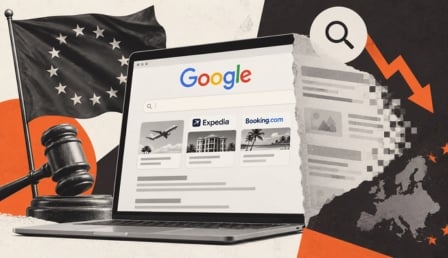
- Google is overhauling Search results across the EU to comply with the Digital Markets Act (DMA), calling the changes the largest reduction in search quality in its 29-year history.
- The new results give greater prominence to vertical search and comparison services such as Expedia and Booking.com, potentially reducing direct visibility for hotels, airlines, restaurants and other businesses.
- Google says previous DMA-driven changes caused a 30% drop in free, direct booking traffic to European businesses, and expects the latest overhaul to have a further impact. That could make organic visibility and customer acquisition more expensive for affected brands.
- Searchers will also lose some useful functionality, including real-time pricing in certain result carousels. Google says testing with millions of European users showed high dissatisfaction, with people needing to repeat searches to find what they wanted.
- The changes follow a €460 million EU fine for Google favouring its own services in areas including shopping, hotels, transport and sports. The overhaul applies to EU users, while users outside the EU will not be affected.
- Read more

AI in digital
Platforms
Google Merchant Center Adds New AI Search Insights
- Google Merchant Center’s AI Performance Insights report has added three new metrics: AI Search intent, AI Search terms and AI attributes, giving merchants more visibility into how products appear in AI-powered searches.
- AI Search intent shows how products match what customers are searching for through AI, helping marketers better understand the intent driving product discovery.
- AI Search terms highlights popular terms that merchants could add to product descriptions to improve their visibility within AI search experiences.
- AI attributes identifies missing product attributes that could be added to feeds to potentially increase AI search visibility, giving ecommerce marketers another practical optimisation lever.
- The additions build on Google’s AI Performance Insights report launched in July, which has also recently begun expanding into more regions.
- Read more

AI in digital
Platforms
Meta’s Muse Makes AI Agents Personal
- Meta has launched Muse, a personal AI agent designed to actually complete everyday tasks, including sending emails, booking travel, filling out forms, lowering bills and making purchases. It connects directly to services such as email, calendars, payments, shopping and other apps.
- Muse signals Meta’s bet on the next phase of consumer AI, moving beyond chatbots that answer questions towards agents that act autonomously on users’ behalf, including continuing tasks after users leave the app.
- Trust is the major hurdle. Muse requires extensive access to personal information, arriving shortly after Meta agreed to an $18 billion multistate settlement and following years of privacy controversies that could make consumers wary of handing over even more data.
- Meta says Muse runs inside a dedicated secure virtual machine, cannot see passwords or payment methods, and does not share conversations or user data with Meta’s advertising systems. Users can also choose which services they connect individually.
- Muse launches in the US across web, iOS, Android and WhatsApp, with Meta AI glasses support planned. A free tier is available alongside US$20/month Power and US$100/month Maximum plans, positioning agentic AI as both a new consumer product and potential subscription revenue stream for Meta.
- Read more
No results found.
